CORTIS & RESCENE Explained: The Memes (영크크, 거제 야호) Behind Korea's Hottest Rookies
What does "영크크" mean? What's "거제 야호"? In 2026, two rookie groups took over Korea through memes — here's who CORTIS and RESCENE are, why they blew up, and what their viral slang actually means.
Every few months, K-pop fans go hunting for the next group to stan. But 2026's most interesting rookies didn't climb the charts the old-fashioned way. They got there through memes, YouTube, and a do-it-yourself attitude — and watching how they did it tells you a lot about where K-pop (and Korean internet culture) is heading right now.
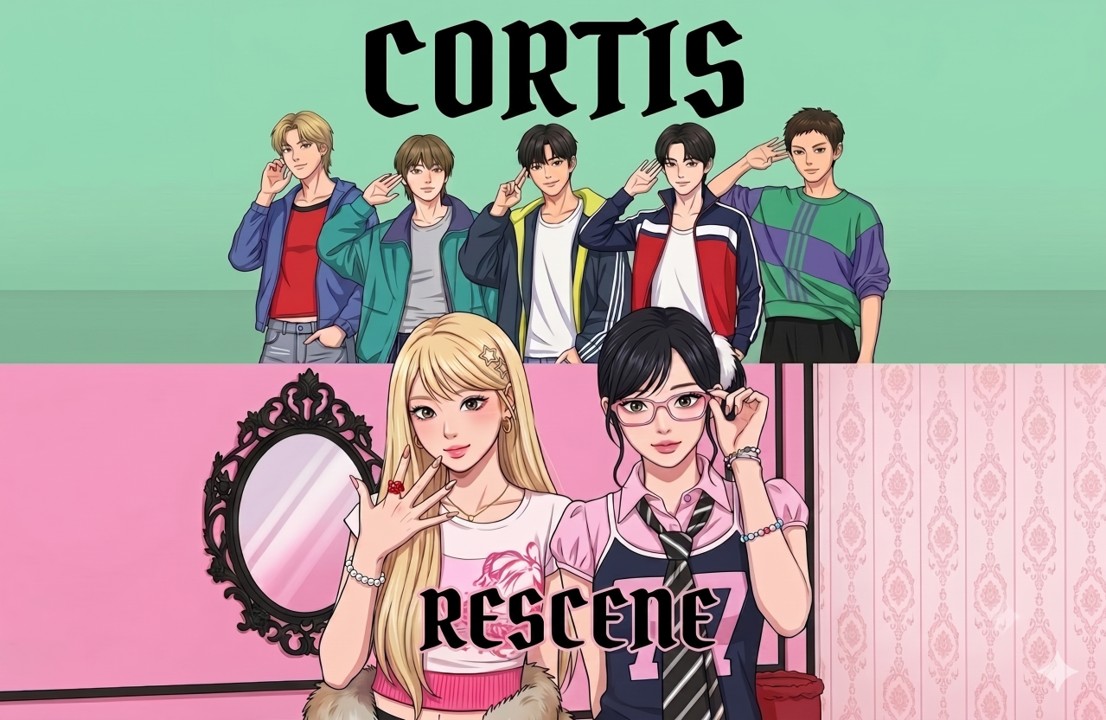
Meet the two names every K-pop fan is talking about: CORTIS and RESCENE. Here's your starter guide.
CORTIS and the "영크크 (Young Creator Crew)" Meme 🎨
CORTIS (코르티스) is a five-member boy group under BigHit Music — yes, the same label as BTS and TOMORROW X TOGETHER — making them the first new BigHit boy group in about six years. Naturally, expectations were sky-high. But instead of arriving as a polished, label-engineered product, CORTIS leaned into something different.
The group name comes from "COLOR OUTSIDE THE LINES" — and that's not just branding, it's how they work. CORTIS calls itself a "Young Creator Crew": a team of teenage members who write, compose, choreograph, and even help direct their own music videos. They're less a manufactured idol group and more a self-made creative collective — a refreshing twist on a genre often criticized for being factory-produced.
Why They Blew Up: Meme Magic 🔥
Here's the secret to CORTIS's rise: almost every song they release turns into a meme.
- 영크크 (yeong-keu-keu) — short for YOUNGCREATORCREW, a track whose hook became a nationwide slang word. The breakout line was basically "...not that — youngcreatorcrew," and fans started tacking "말고 영크크 (...not that, but 영크크)" onto the end of any sentence. To call something 영크크 now means it's young, creative, trendy, hip. The internet ran with it.
- 늙크크 (neulk-keu-keu) — the inevitable parody: "Old Creator Crew." Tired office workers in their 30s started self-deprecatingly calling themselves 늙크크 ("I'm not 영크크 anymore... I'm 늙크크"), which only made the original meme bigger.
And then came their biggest meme of all — which deserves its own section.
Decoding "REDRED": K-Pop's Weirdest, Most Quotable Lyrics 🚦
CORTIS's 2026 hit REDRED (레드레드) — the lead track off their EP GREENGREEN — is the perfect example of how the group turns strange lyrics into a phenomenon. On first listen, the words sound like nonsense. But there's a clever idea underneath: the whole song is built on a traffic-light metaphor.
- RED = all the things to avoid — being a pushover, reading the room too much, faking "cool."
- GREEN = what to chase — your crew, freedom, doing what you actually want.
In the song, the members basically tag uncool behaviors with a disapproving "that's red-red," then flip to "green-green" when it's time to break free. It's a youth manifesto disguised as gibberish — and it became so iconic that even a Korean prime-minister nominee quoted the lyrics in a confirmation hearing to say she "wouldn't play it safe."
What makes it gold for Korean learners is the slang packed into the "red" list:
- 팔랑귀 (pal-rang-gwi) — literally "fluttering ears." It describes someone easily swayed by whatever others say — a pushover. The viral point-dance even has you flutter your hands by your ears.
- 눈치 보다 (nun-chi bo-da) — to "read the room," constantly watching others' reactions and worrying what they think. (눈치 is a hugely important Korean concept on its own.)
- 사리다 (sa-ri-da) — to hold back, play it safe, avoid sticking your neck out. The lyric "도가니 사리기" ("holding back your knees") is a funny, exaggerated way to say don't be timid — dance hard.
- 쿨한 척 (cool-han cheok) — "pretending to be cool." The suffix ~척 (cheok) means "pretending to do" something, and it's everywhere in casual Korean.
So a song that sounds like word-salad is actually teaching you four genuinely useful Korean expressions. That's peak CORTIS: hide real substance inside something that looks like a joke, and let the internet do the rest.
The lesson CORTIS teaches about modern K-pop: in the age of TikTok and Reels, a song that becomes a meme can be more powerful than a song that's merely good. CORTIS makes both.
RESCENE and the "거제 야호 (Geoje Yaho)" Meme 🌸
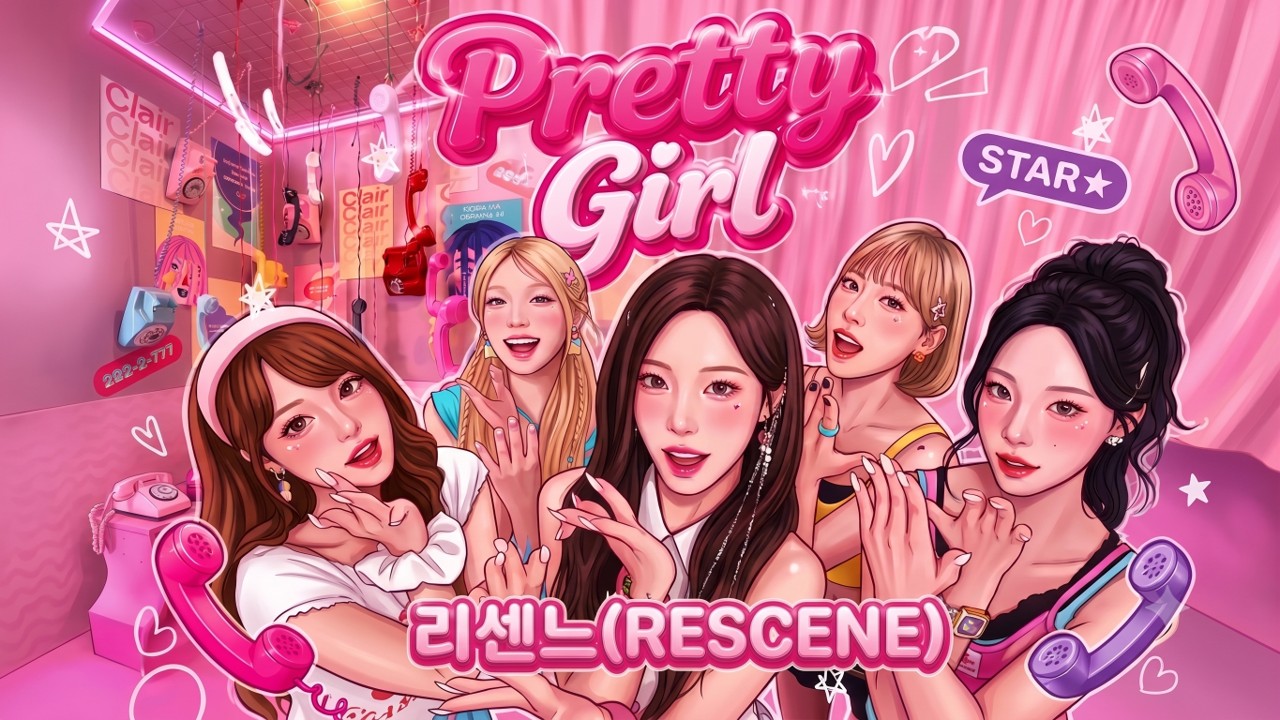
If CORTIS is the polished-label rookie, RESCENE (리센느) is the ultimate underdog story — a "small-agency" girl group (under THE MUSE Entertainment) that proves a great song and a viral moment can beat a giant marketing budget.
The five-member group's name is a blend of "Scene" + "Scent" — the idea that, like a smell can suddenly bring back a memory, their music recreates vivid scenes in your mind. (It's based on the real psychological "Proust effect.") They debuted back in 2024 to little fanfare. Then, in 2026, everything changed — thanks to one phrase.
"거제 야호!" — The Meme That Changed Everything 📣
It started on the personal YouTube channel of RESCENE's leader Woni, who's from the island city of Geoje (거제). Japanese member Minami appeared in a video doing a 갸루 (gyaru) — a Japanese street-fashion persona — and cheerfully shouted "거제, 야호~!" (Geoje, Yaho!).
Quick language note: that 야호 (yaho) isn't the Korean "yahoo!" you shout from a mountaintop. It's the Japanese greeting やっほー (yahho) — a casual "heyy~" popular in gyaru culture. So "거제 야호" basically means "Heyy, Geoje~!"
The clip exploded. The phrase became a nationwide short-form meme, the YouTube channel rocketed past hundreds of thousands of subscribers, and — in the ultimate plot twist — Geoje city made the whole group its official tourism ambassadors.
The "Miracle Reverse-Run" 📈
Here's the best part. As the meme spread, listeners went looking for RESCENE's music and rediscovered their 2024 debut title track, "LOVE ATTACK" — a summery dance-pop song that hadn't even cracked the Melon Top 100 on release. Two years later, riding the meme wave, it roared back up the charts to as high as #5.
In Korean, this kind of comeback has a name: 역주행 (yeokjuhaeng) — a "reverse run," when an old song suddenly shoots back up the charts. RESCENE pulled off one of the most dramatic 역주행 stories in recent memory — proof that in 2026, virality can resurrect a song long after release.
The buzz got so big that even established artists joined in. Singer John Park met up with RESCENE for a YouTube video — playfully framed as a "rain dance" to pray for the group's first #1 — and performed his own soulful, re-arranged cover of "LOVE ATTACK," even rewriting the lyrics to tell the group's underdog story. Fans loved it so much they begged for an official release. When senior artists start covering a rookie group's song, you know something special is happening.
What These Two Groups Tell Us About K-Pop in 2026
Put CORTIS and RESCENE side by side and you can see where K-pop is heading:
- It's self-made. Whether it's CORTIS writing their own songs or RESCENE building a fanbase through casual YouTube lives, the polished, untouchable idol image is giving way to something more personal and DIY.
- It's meme-powered. A catchy phrase ("영크크," "거제 야호") can now do what a huge ad campaign used to. The internet, not the label, decides what blows up.
- The underdog can win. A six-year-in-the-making BigHit group and a tiny-agency rookie can trend on the same week. Budget matters less than a moment.
Korean Vocabulary: Rising K-Pop Edition
| Korean | Romanization | Meaning |
|---|---|---|
| 신인 | shin-in | A rookie / newly debuted artist |
| 역주행 | yeok-ju-haeng | A "reverse run" — an old song re-charting |
| 밈 | mim | Meme |
| 자체 제작 | ja-che je-jak | Self-produced (writing/making your own music) |
| 입덕 | ip-deok | To "enter fandom" — to become a fan of someone |
| 팔랑귀 | pal-rang-gwi | "Fluttering ears" — a pushover, easily swayed |
Sample sentence:
요즘 코르티스 밈 너무 웃겨서 입덕했어! 리센느 역주행도 봤어?
"The CORTIS memes are so funny lately that I became a fan! Did you see RESCENE's chart comeback too?"
That's exactly how a Korean fan talks about discovering new groups — and 입덕 (ip-deok, "entering the fandom") is the word you'll see everywhere when someone falls for a new artist.
Your Next Favorite Group Is Already Trending
The fun of K-pop in 2026 is that you don't have to wait for the next big thing — it's happening live, in real time, on your feed. CORTIS turned self-production into a movement and their lyrics into a language. RESCENE turned one joyful "야호!" into a chart miracle. Both prove the same thing: today, the line between artist and internet, between idol and meme, is thinner than ever.
So go listen, watch a few YouTube lives, learn to drop a "영크크" at the right moment — and enjoy catching a rising star before everyone else does.
Want to actually understand the memes, lyrics, and slang your favorite groups are creating? At Seoul X On, our online Korean lessons connect the language to the K-pop and internet culture you already love — so you're never lost in the comments again. Try a free trial lesson and keep up with K-pop like a native speaker.