Is Korea Still at War? The Real History Behind 'Crash Landing on You'
Many fans of Korean dramas ask the same question: did the Korean War ever actually end? Here's the real story behind the divided peninsula — the DMZ, separated families, and a history you can even taste.
If you were in Seoul on June 6th, you might have noticed something strange. At exactly 10:00 AM, sirens sounded across the entire city. For one minute, the country seemed to pause.
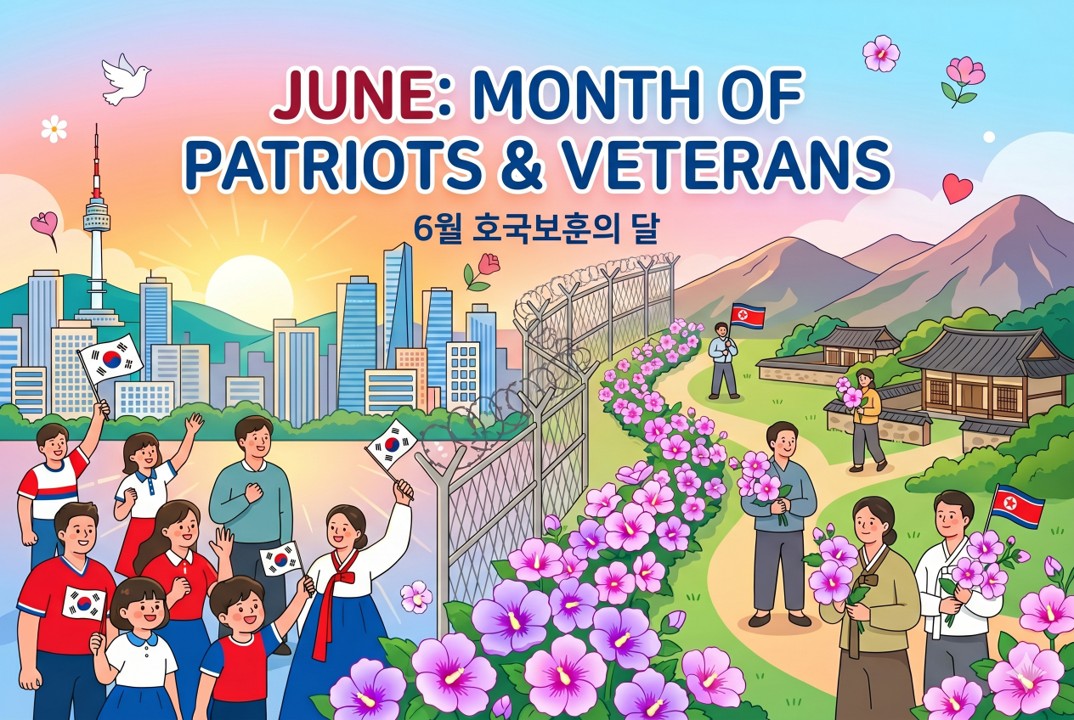
You didn't miss an emergency. You witnessed 현충일 (Hyeonchung-il), Korean Memorial Day — the solemn opening of what Koreans call 호국보훈의 달 (the Month of Patriots and Veterans).
While tourists come to Korea in June for early-summer weather, outdoor cafés, and concerts, for Koreans this month carries a heavier meaning. It's anchored by two dates: June 6th, to remember those who gave their lives, and June 25th, the day the Korean War began in 1950.
That might sound like distant history. But if you've ever watched a K-drama and wondered "wait — is Korea still at war?", this month is when that question becomes real. The echo of that war is woven into modern Korean life, it's the real context behind the dramas you love, and — as you'll see — it might even be on your lunch plate.
Let's look beyond the screen.
The Real History Behind 'Crash Landing on You'
If you're an international fan of Korean media, your main exposure to the North–South relationship probably comes from hit dramas like Crash Landing on You or tense spy thrillers. On screen, the DMZ (Demilitarized Zone) is a dramatic backdrop for forbidden romance or high-stakes espionage.
For Koreans, that heavily fortified border isn't a movie set. It's a real, physical line drawn more than 70 years ago — the most heavily militarized border on Earth, running right across the middle of the peninsula.
So the romance of Crash Landing on You is fiction, but the border it's built around is very, very real.
Did the Korean War Ever End? (Is Korea Still at War?)
Here's the part that surprises most visitors: the Korean War never officially ended.
The fighting stopped in 1953 — but what was signed then was an armistice (휴전), a ceasefire agreement, not a peace treaty. No formal peace has ever been signed. That means that, technically, South and North Korea are still at war to this day, separated by a ceasefire line that has held for over seven decades.
So if you've ever wondered whether Korea is still at war: the answer is, in a legal sense, yes. For the rest of the world it's geopolitics. For Koreans, it's recent history that shaped the country they live in right now.
What "Separated Families" Means in Korea
The most human legacy of the war is the 이산가족 (i-san-ga-jok) — separated families.
When the border was sealed, parents were cut off from children, brothers from sisters. Many people left home believing they'd return in a few weeks, once things settled down. They never could.
This isn't ancient history. Walk into an office tower in Gangnam or a café in Hongdae today, and you'll meet young professionals whose grandparents originally came from the North during the war. During major holidays like 추석 (Chuseok) or 설날 (Seollal), when millions of Koreans travel to their ancestral hometowns, some of these elders can only travel as far north as Imjingak (임진각), near the DMZ — where they look out over the border toward a hometown they've never been able to visit again.
For decades, there were occasional, heavily monitored 이산가족 상봉 (family reunions), broadcast live on national TV. Watching elderly siblings embrace for just a few days — knowing they would have to part again, likely forever — is something many Koreans still remember vividly.
The Korean War History You Can Taste: Naengmyeon and Refugee Food 🍜
Here's the part that surprises people most: some of Korea's most beloved dishes are, in fact, the food of those separated families.
When refugees fled south during the war, they brought their regional recipes with them. Unable to return home, they kept their hometowns alive the only way they could — by cooking them. Today, millions of people eat these dishes without realizing they're tasting a piece of the divided peninsula.
- 평양냉면 (Pyeongyang Naengmyeon) — cold buckwheat noodles in a clear, cool broth, originally from Pyongyang, now the capital of North Korea. Brought south by refugees, it became a nationwide favorite — and a quiet symbol of the North, so much so that it took center stage at the 2018 inter-Korean summit.
- 함흥냉면 (Hamhung Naengmyeon) — chewy sweet-potato-starch noodles tossed in a spicy sauce, descended from the nongma-guksu of Hamhung in the North. The name itself was given by refugees in postwar Seoul, longing for the food of home.
- 부산 밀면 (Busan Milmyeon) — a wheat-noodle cousin of naengmyeon, invented by northern refugees in Busan who couldn't find the right ingredients and improvised with wartime flour. A dish born entirely of displacement.
- 아바이순대 (Abai Sundae) — a hearty Hamgyong-style blood sausage, the signature dish of Sokcho's Abai Village (속초 아바이마을) — Korea's most famous settlement of northern refugees. (Abai is a North Hamgyong dialect word for an older man or grandfather.)
So the next time you slurp a bowl of naengmyeon on a hot Seoul afternoon, remember: that recipe may have walked hundreds of kilometers south in someone's memory, carried by a person who never made it back home.
Why "Hometown" (고향) Means So Much in Korean
Understanding this history adds a new layer to a single Korean word: 고향 (go-hyang) — hometown.
In English, your hometown is just the place you grew up. In Korean, 고향 carries a deep weight of nostalgia, longing, and belonging. Once you know that an entire generation of Koreans was permanently cut off from their 고향 — able to taste it in a bowl of noodles but never to set foot there again — the word takes on a far more profound meaning in Korean literature, music, and everyday conversation.
That's the thing about learning a language through its culture: a word stops being vocabulary and starts being a story.
Korean Vocabulary: The Korean War and a Divided Peninsula
| Korean | Romanization | Meaning |
|---|---|---|
| 이산가족 | i-san-ga-jok | Separated families |
| 고향 | go-hyang | Hometown |
| 휴전 | hyu-jeon | Armistice / ceasefire |
| 통일 | tong-il | Unification |
| 평화 | pyeong-hwa | Peace |
Sample sentence:
언젠가 통일이 되어서 이산가족들이 고향에 갈 수 있으면 좋겠어요.
"I hope that one day unification happens, so separated families can return to their hometowns."
More Than a Modern City
Seoul is a hyper-modern metropolis that moves at lightning speed — trendy fashion, cutting-edge tech, flawless pop culture. It's easy to get swept up in all of it.
But taking a moment to understand this history — especially in June — gives you a deeper, more authentic appreciation for the country. The glittering skyline isn't just a modern marvel; it's a city built on layers of profound, recent history. A history you can read about, walk through at the DMZ, and even taste in a humble bowl of cold noodles.
Want to learn Korean by understanding the real stories, history, and culture behind the language? At Seoul X On, our lessons go beyond textbook grammar to connect you with the authentic, living heart of Korea. Try a free trial lesson and discover the stories behind the words.