Sound Like a Native: 3 Essential Korean Exclamations for Natural Conversation
Want to sound like a native Korean speaker? Master these 3 essential conversational fillers—from daebak to heol—and level up your daily chats!

How to use common "fillers" and reactions to add flavor to everyday Korean.
If you’ve spent any time exploring K-content, you’ve likely noticed that conversational Korean is about more than just stringing grammar points together.
Native speakers frequently pepper their sentences with short, expressive exclamations known as chu-im-sae (추임새).
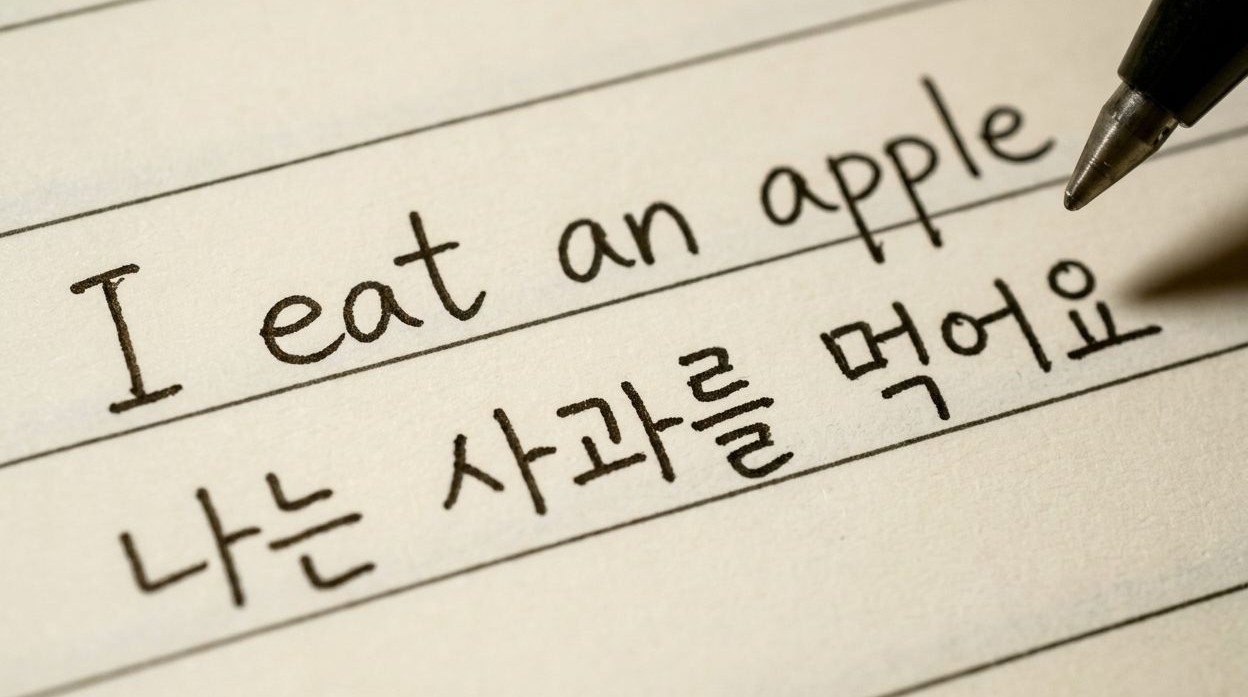
While textbooks focus on formal structures like "I am a student," real-life conversations rely on these subtle habits to show surprise, pivot between topics, or simply keep the rhythm of the discussion going.
If you're looking to make your Korean sound a bit more fluid, keeping these three types of expressions in mind can be incredibly helpful.
1. The Instant Reactions: 대박 (Dae-bak) & 헐 (Heol)
These are the most common ways to react to news or surprises instantly.
- 대박! (Dae-bak): This is your universal go-to for anything impressive or shocking in a positive way.
It’s the equivalent of saying "Awesome!", "That’s insane!", or "Wow!" - 헐 (Heol): Like Dae-bak, this is an exclamation of surprise, but it's typically used when you are taken aback, speechless, or slightly disappointed.
It’s the equivalent of "Wait, what?", "No way," or "Whoa."
2. The Sentence Pivots: 아니 (Ani) & 근데 (Geun-de)
You’ll notice that many native speakers start their sentences with these words, even when they don't literally mean "no" or "but."
- 아니 (Ani): While it literally means "No," it often acts as a conversation starter when someone is about to make a point or share a thought.
It functions a lot like saying "Wait..." or "Actually..." - 근데 (Geun-de): This is a shortened form of geu-reon-de (but). It’s used as a universal pivot to change the subject or to build on what someone else just said.
3. The Active Listener: 진짜? (Jin-jja?)
This is perhaps the most useful word for keeping a conversation flowing. Dropping a Jin-jja? shows the speaker that you are fully engaged.
It translates to "Really?", "For real?", or "Seriously?" depending on your intonation.
Essential Korean Vocabulary: Conversational Fillers
These five expressions will help you navigate daily chats with ease.
| Korean | Romanization | Meaning |
|---|---|---|
| 대박 | Dae-bak | Awesome! / Insane! |
| 헐 | Heol | Whoa / No way (Surprise/Shock) |
| 아니 | A-ni | Actually... / Wait... (Starter) |
| 근데 | Geun-de | But / By the way |
| 진짜 | Jin-jja | Really? / Seriously? |
Sample Sentence:
"진짜요? 대박! 저도 다음에 거기 꼭 가보고 싶어요."
"Really? That’s awesome! I’d love to go there next time, too."
Learn Korean: Everyday phrases, grammar, and pronunciation tips
Mastering a language is about more than just memorizing words—it’s about understanding how those words live in the real world.
At Seoul X on, we help you bridge the gap between textbook grammar and real-life conversations by exploring the cultural context behind everything you learn.
Ready to take your skills to the next level? Book Your free trial lesson today and start your journey with current, relevant content that makes learning Korean feel completely natural.