EPS-TOPIK 2026: The Complete Guide to Korea's Employment Permit System Korean Test
Everything you need to know to pass EPS-TOPIK and start your career in Korea — written for the workers, not the bureaucrats.
If you're reading this, you probably have one goal: to work in South Korea. And someone has already told you that EPS-TOPIK is the door you need to walk through.
Good news — it's a door that thousands of workers from Vietnam, the Philippines, Nepal, Indonesia, and other countries pass through every year. Bad news — the test isn't easy, and the information about it is scattered across confusing government websites in multiple languages.
This guide pulls everything together in one place: what EPS-TOPIK is, who needs it, how it's scored, and the most practical things you can do to pass. Let's start.
⚠️ Important: Rules, fees, dates, and quotas change every year and differ by country. Always confirm the latest details on the official EPS-TOPIK site (epstopik.hrdkorea.or.kr) and your country's sending agency (DMW in the Philippines, EPS Center in Vietnam, DOFE in Nepal, etc.) before applying.
What Is EPS-TOPIK?
EPS-TOPIK stands for Employment Permit System – Test of Proficiency in Korean. It's a Korean language test specifically designed for foreign workers who want to come to South Korea on an E-9 work visa — the visa used for jobs in manufacturing, construction, agriculture, fisheries, and services.
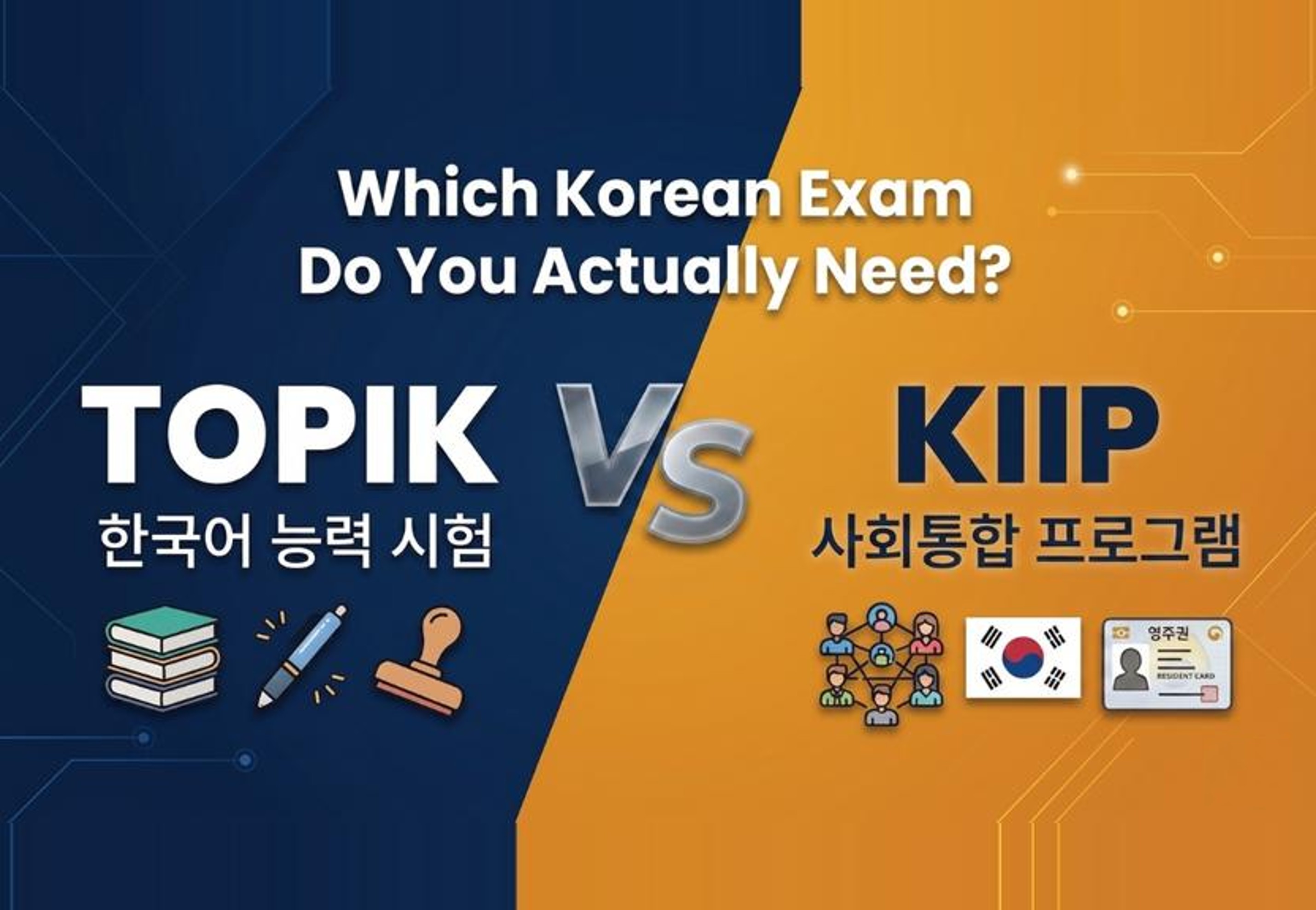
Here's the most important thing to understand: EPS-TOPIK is different from regular TOPIK.
If your goal is to come to Korea as an E-9 worker, EPS-TOPIK is the test you need — not regular TOPIK.
Who Can Take EPS-TOPIK?
To be eligible, you generally need to meet these basic requirements:
Be a citizen of one of the 16 partner countries: Vietnam, the Philippines, Thailand, Indonesia, Mongolia, Sri Lanka, Cambodia, Uzbekistan, Pakistan, Myanmar, Nepal, Bangladesh, Kyrgyzstan, Timor-Leste, Laos, and China (Tajikistan is being added)
Be between roughly 18 and 39 years old (the exact age range may differ slightly by country and round — check your country's official announcement)
Have no criminal record
Have no history of illegal stay in Korea
Not be banned from leaving your country
Some industries require you to have no color blindness/weakness and be in good physical condition
Each country has its own sending agency. You apply through them — not directly to Korea.
How the Test Works
EPS-TOPIK is split into two sections, taken back-to-back in one sitting:
Listening (듣기) — multiple-choice questions about short conversations, announcements, and workplace instructions
Reading (읽기) — multiple-choice questions about signs, notices, short texts, and basic written instructions
Total: 200 points maximum (100 points per section)
Total time: typically around 50–70 minutes, depending on the round
Format: CBT or UBT (Computer-Based or Tablet-Based Test)
📌 The exact number of questions and time per section has varied between rounds and countries (some recent rounds used 20 questions per section, others 25). Always check the official testing module on epstopik.hrdkorea.or.kr for your specific round.
Both sections focus heavily on practical, workplace situations: a supervisor giving directions, a coworker asking for help, safety warnings, factory and construction terminology.
The Passing Score — It's More Complicated Than You Think
Here's where it gets tough: EPS-TOPIK doesn't have a simple fixed passing score.
The official baseline is 80 out of 200, but scoring 80 does not guarantee you pass. Here's how it really works:
Everyone who scores 80 or higher is eligible.
Candidates are then ranked from highest to lowest score.
Only the top scorers — based on each country's annual worker quota — actually pass.
The real cutoff often climbs much higher because of competition.
A real example: In one recent Myanmar manufacturing round, only 5,540 out of 48,000 candidates passed — and the top score was a record 97.5 out of 100 on the written test.
Translation: you don't just need to pass. You need to score as high as possible to actually get selected.
The Application Process (Step by Step)
Watch for announcements from your country's sending agency. Each country announces test rounds annually — usually with limited slots.
Register online or in person through the official channel in your country. You'll need a passport, photo, and application fee (about USD $24–28, paid in local currency).
Take the test at one of the EPS-TOPIK centers across the partner countries. The format is CBT or UBT (computer or tablet-based).
Check your results — typically released within a few weeks on the official EPS-TOPIK website (epstopik.hrdkorea.or.kr).
If you pass, you move on to a Skills Test in your specific industry (manufacturing, agriculture, etc.).
Get added to the EPS job-seeker roster, where Korean employers can find and select you. Your name stays on the roster for up to 1 year, and your EPS-TOPIK score is valid for 2 years.
⚠️ Important: Passing EPS-TOPIK does not guarantee you a job in Korea. It qualifies you to be considered. Many candidates wait months — sometimes over a year — to be matched with an employer.
What to Study: The Official Textbook Is Everything
Here's the single most important tip in this entire guide: the EPS-TOPIK exam is based on the official Standard Textbook published by HRD Korea. Almost every question is drawn from the official open question bank tied to this material.
Free official resources at epstopik.hrdkorea.or.kr:
The EPS-TOPIK Standard Textbook (Volumes 1 & 2) — available free in Korean and several local languages
The open question bank (released and updated by HRD Korea — your real test questions come from here)
Past exam materials and audio files for the listening section
Volume 1 covers everyday Korean and basic workplace language. Volume 2 dives into industry-specific vocabulary — manufacturing, construction, agriculture, fishing, services. If you're applying for manufacturing, focus heavily on the manufacturing chapters in Volume 2.
5 Practical Tips to Maximize Your Score
Don't rely on private textbooks alone. Use them as supplements, but the official textbook and open question bank are the source of the real questions. Memorize the example dialogues.
Master Hangul first. Sounds basic, but many candidates lose easy reading-section points because they're still slow at reading Korean letters. Aim to read Hangul fluently before tackling vocabulary.
Practice with past papers under time pressure. The real test is fast — you'll wish you had practiced with a timer.
Focus on safety vocabulary. Workplace safety terms (danger, helmet, fire, emergency exit, machine, supervisor) come up constantly. Build a personal flashcard list.
Study with audio every day. The listening section trips up candidates who only read Korean. Native-speed audio sounds very different from textbook recordings. The official audio files and YouTube channels are your friends.
Common Mistakes That Cost Candidates Their Pass
Cramming only in the last month. EPS-TOPIK rewards 3–6 months of steady study, not last-minute panic.
Ignoring the listening section. Many fail not because of reading, but because they can't follow spoken Korean at natural speed.
Skipping mock tests. You need to know what time pressure feels like before exam day.
Studying only general Korean. EPS-TOPIK isn't about ordering coffee — it's about understanding a foreman giving instructions in a factory.
You Can Do This — One Lesson at a Time
EPS-TOPIK is challenging, but it's also one of the most rewarding tests you can prepare for. Every hour you spend studying is an hour closer to a new chapter of your life in Korea.
At Seoul X On, our online Korean lessons are taught by native teachers who understand exactly what EPS-TOPIK candidates need — workplace vocabulary, listening fluency, and the confidence to score high under pressure. We offer flexible 1-on-1 sessions that fit around your work schedule, in your time zone.
If you're serious about working in Korea, you don't have to study alone. Book a free trial lesson and let us help you build a study plan that actually leads to a passing score.
📚 Sources & Where to Verify the Latest Info:
Official EPS-TOPIK site: epstopik.hrdkorea.or.kr
Always cross-check with your country's most recent official announcement before applying — rules and fees change annually.