Hearts2Hearts "RUDE!" Explained — Learn the Viral Line (+ Free K-pop Class)
The line that took over TikTok isn't sung — it's spoken. Here's what "You're so rude / I couldn't care less" sounds like in real Korean, the words hiding in the lyrics, and how to learn the whole song with us for free.

If a clip of eight girls at a café, tossing their hair and delivering the most unbothered "I couldn't even care less" you've ever heard, has been living rent-free in your For You page — you already know Hearts2Hearts "RUDE!" 👀
In case you're new to them: Hearts2Hearts (하츠투하츠, or H2H) is an eight-member girl group under SM Entertainment — the label behind Aespa, Red Velvet, EXO, and NCT. They got hot fast: even before "RUDE!", they'd already landed a collab most Korean kids would lose their minds over — Catch! Teenieping (캐치! 티니핑), the candy-colored "emotion fairy" cartoon that's such a merch machine that worn-out parents nickname it 등골핑 (deung-gol-ping, "spine-snap ping") and 파산핑 (pa-san-ping, "bankruptcy ping"). In H2H's 2025 single "STYLE," all eight members even got turned into their own Teeniepings (지우핑, 스텔라핑, and so on). 🍬
Then "RUDE!" pushed them fully into the global spotlight — and here's the fun part: that whole confident, so-what energy has very specific Korean words behind it. Learn a handful and you're not just mouthing along, you're talking like the song. Let's decode it. 💜

💗 First: What Is "RUDE!" (and Why Is It Everywhere)?
Hearts2Hearts debuted on February 24, 2025 with the single album "The Chase" — SM's first new girl group since Aespa back in 2020. Then "RUDE!" dropped on February 20, 2026, and short-form did what short-form does. The RUDE! challenge has racked up 3.6 billion cumulative views on TikTok, with more than 2.8 million user-created videos, and the song earned Hearts2Hearts their first-ever Inkigayo win on March 22, 2026.
But the real engine wasn't the chorus. It was the spoken part.
🗣️ The Viral Line: "You're So Rude" → How Koreans Actually Say It
The bit everyone films is a little spoken skit in the middle of the song — one member telling a story like she's gossiping with you at a café:
You know what he said to me? / What? / He was like, "You are so rude." / And I was like, "Boy, does it look like I could care? I couldn't even care less!"
It's in English in the song, which is exactly why it's so easy to copy worldwide. But the feeling — someone calls you out, and you flick it away without blinking — is peak Korean everyday attitude. So how would you actually say this in Korean? This is where it gets fun.
😤 "You're so rude" — the textbook word vs. the friend word
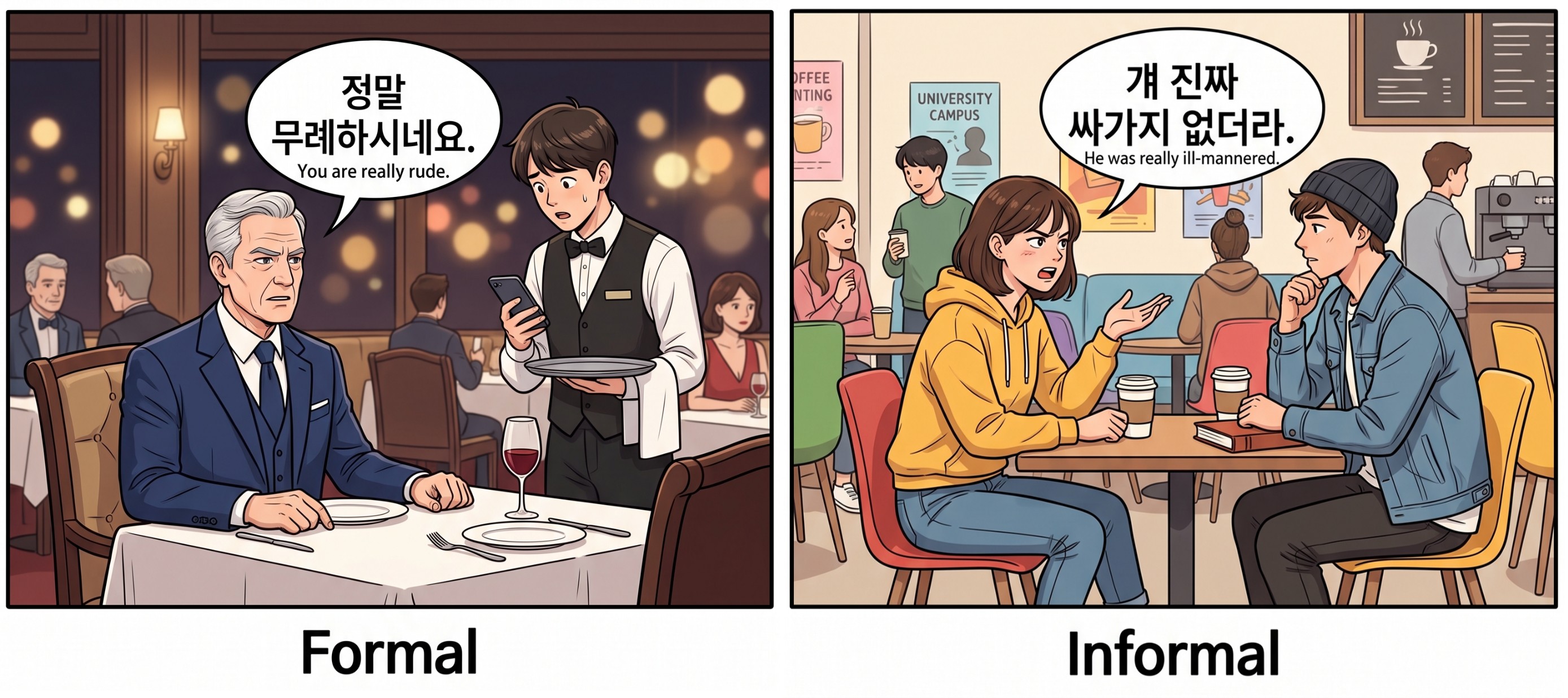
There are two levels here, and knowing the difference is basically a cheat code for sounding natural:
- 무례하다 (mu-rye-ha-da) — "to be rude / impolite." This is the proper, dictionary word. You'd use it in a formal complaint, a review, a serious moment.
- 싸가지 없다 (ssa-ga-ji eop-da) — this is what friends actually say. It literally means something like "has no manners / no home training," and it's the punchy, real-life version of "so rude." Careful, though: it's blunt and a little rough, so it's for friends and venting, not for your boss. 😅
So the song's "You are so rude" lands two ways:
- Polite/neutral: 너 진짜 무례하다 (neo jin-jja mu-rye-ha-da) — "you're really rude."
- Friends, with attitude: 너 진짜 싸가지 없다 (neo jin-jja ssa-ga-ji eop-da) — same energy as the song, way more real.
🙄 "I couldn't care less" — meet 어쩌라고
Now the comeback. "I couldn't even care less" has a perfect, wildly common Korean equivalent, and it's one word you'll hear constantly:
어쩌라고 (eo-jjeo-ra-go) — "So what? So what do you want me to do? So what do you expect me to do?" It's used when someone's annoyed, or to show they don't care what others say — and it's not a polite expression, so keep it for friends.
Put it together and you've basically rebuilt the viral line in Korean:
걔가 나한테 "너 진짜 싸가지 없다" 이러는 거야. 그래서 내가, "어쩌라고?" (gyae-ga na-han-te "neo jin-jja ssa-ga-ji eop-da" i-reo-neun geo-ya. geu-rae-seo nae-ga, "eo-jjeo-ra-go?") — "So this person goes, 'You're so rude.' And I was like, 'So what?'"
That's the whole meme, in Korean, in one breath.
💡 Bonus flex: teens turned 어쩌라고 into the even sillier 어쩔티비 (eo-jjeol-ti-bi) — literally "so-what, go watch TV." It's peak internet-Korean for "I did not ask and I do not care." Drop it and any Korean Gen Z will laugh.
📲 We break down viral lines like this in quick clips on our Instagram — bite-sized Korean from the songs and trends you're already watching.
😎 The Korean Hiding in the Actual Lyrics
The spoken part is the hook, but the sung lyrics are where the vocabulary gold is. The whole song is about being unapologetically yourself — and it teaches you a neat set of opposite words to do it.
One early line sets the tone:
누가 뭐래도 평범한 건 지루해 (nu-ga mwo-rae-do pyeong-beom-han geon ji-ru-hae) — "No matter what anyone says, being ordinary is boring."
Look at the built-in opposites:
- 평범하다 (pyeong-beom-ha-da) — plain / ordinary
- 특별하다 (teuk-byeol-ha-da) — special (the opposite)
- 지루하다 (ji-ru-ha-da) — boring
- 재밌다 (jae-mit-da) — fun (the opposite)
Then it gets into the eyes — Korean loves describing people through their gaze:
날 향한 시선에 "Hate me?" ... 누구보다 눈부셔 (nal hyang-han si-seon-e ... nu-gu-bo-da nun-bu-syeo) — "To the stares aimed at me... I shine brighter than anyone."
- 시선 (si-seon) — someone's gaze / the way people look at you
- 눈부셔 (nun-bu-syeo) — dazzling, shining bright (from 눈부시다)
- 향하다 (hyang-ha-da) — to be aimed toward / face toward (so 날 향한 = "aimed at me," 널 향한 = "aimed at you")
And later, a trio of "how someone comes across" words:
톡 쏘는 말투도 숨김없는 표정도 ... 다 부러운 눈빛 (tok sso-neun mal-tu-do sum-gim-eom-neun pyo-jeong-do ... da bu-reo-un nun-bit) — "My snappy way of talking, my hide-nothing expression... everyone's envious looks."
- 말투 (mal-tu) — the way someone talks / their tone
- 표정 (pyo-jeong) — facial expression
- 눈빛 (nun-bit) — the look in someone's eyes
Tiny words, but they're the ones Koreans actually use to describe charm — exactly the words fans reach for about their bias. 💜
🔁 Two Patterns You'll Use Forever
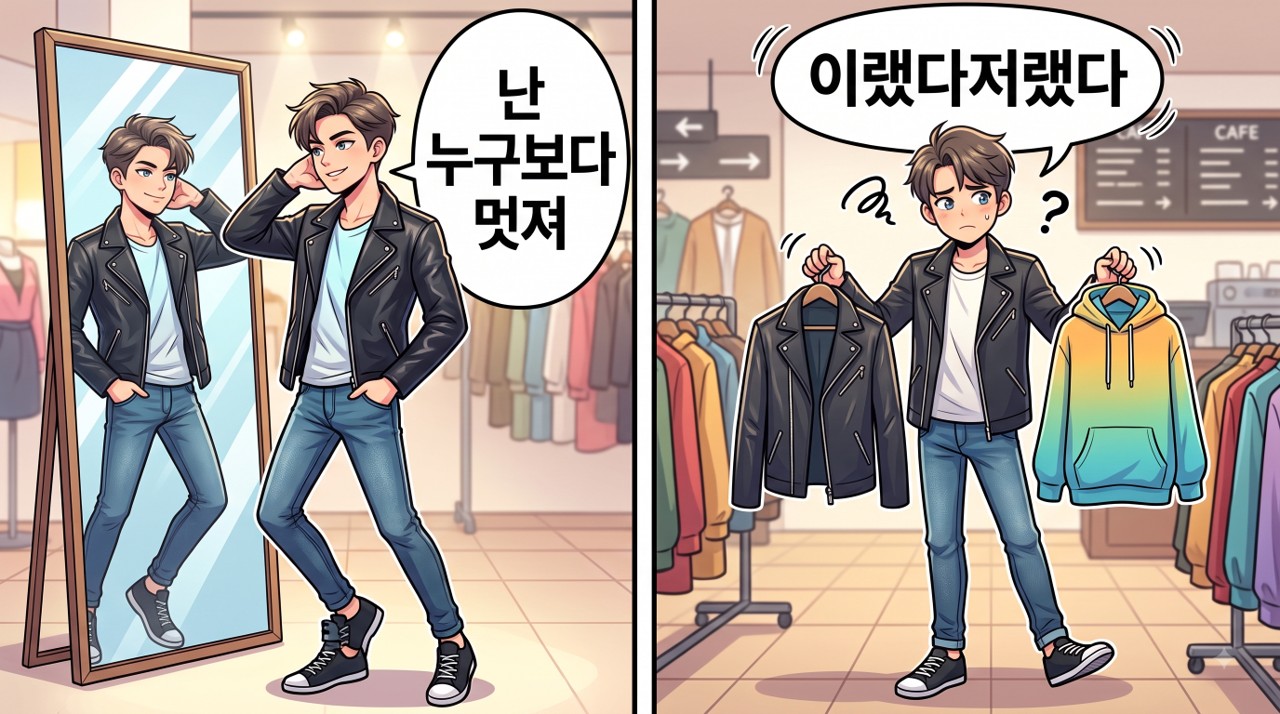
"RUDE!" quietly teaches two super-useful Korean patterns.
1. A 보다 (more than A)
The title line 누구보다 눈부셔 uses ~보다 = "than / more than." It's your go-to comparison tool:
- 누구보다 (nu-gu-bo-da) — "more than anyone"
- 너보다 (neo-bo-da) — "more than you"
- 어제보다 (eo-je-bo-da) — "more than yesterday"
Try it: 난 누구보다 멋져 (nan nu-gu-bo-da meot-jyeo) — "I'm cooler than anyone." Very RUDE!-coded. 😎
2. 이랬다저랬다 (flip-flopping)
The song's got the line 이랬다저랬다 No rule — "flip this way, then that way, no rules." Korean loves gluing two little words together to mean "all over the place":
- 이랬다저랬다 (i-raet-da-jeo-raet-da) — keeps changing their mind / their actions
- 여기저기 (yeo-gi-jeo-gi) — here + there = "everywhere"
- 왔다갔다 (wat-da-gat-da) — come + go = "back and forth"
- 이것저것 (i-geot-jeo-geot) — this + that = "this and that / all kinds"
Once you spot the pattern, you'll catch it in half the K-pop songs you know.
📝 Korean Vocabulary From This Post
| Korean | Romanization | Meaning |
|---|---|---|
| 평범한 | pyeong-beom-han | Plain / ordinary |
| 지루한 | ji-ru-han | Boring |
| 말투 | mal-tu | The way someone talks |
| 표정 | pyo-jeong | Facial expression |
| 어쩌라고 | eo-jjeo-ra-go | "So what? / Who cares?" |
Sample sentence: 평범한 건 지루해. 누가 뭐래도 어쩌라고!
(pyeong-beom-han geon ji-ru-hae. nu-ga mwo-rae-do eo-jjeo-ra-go!)
"Being ordinary is boring. Whatever anyone says — so what!"
That one line is basically the whole "RUDE!" attitude, built from words you just learned.
🎤 Learn This Song With Us — Free Class!
Now you've got the viral line in real Korean, the "be yourself" vocabulary, and two patterns you can use right away. But there's more inside "RUDE!" — a pronunciation twist (why 아무렇게나 sounds like 아무러케나, thanks to ㅎ+ㄱ→ㅋ), the 여기/거기/저기 distance trio, and the ~보다 comparison drill.
We teach songs exactly like this in our live K-pop Korean classes at Seoul X On. You listen, learn the words, practice the tricky pronunciation, and sing along — no experience needed, and mistakes are part of the deal.
[How to Join the Class]
- Go to seoulxon.com/group-class.
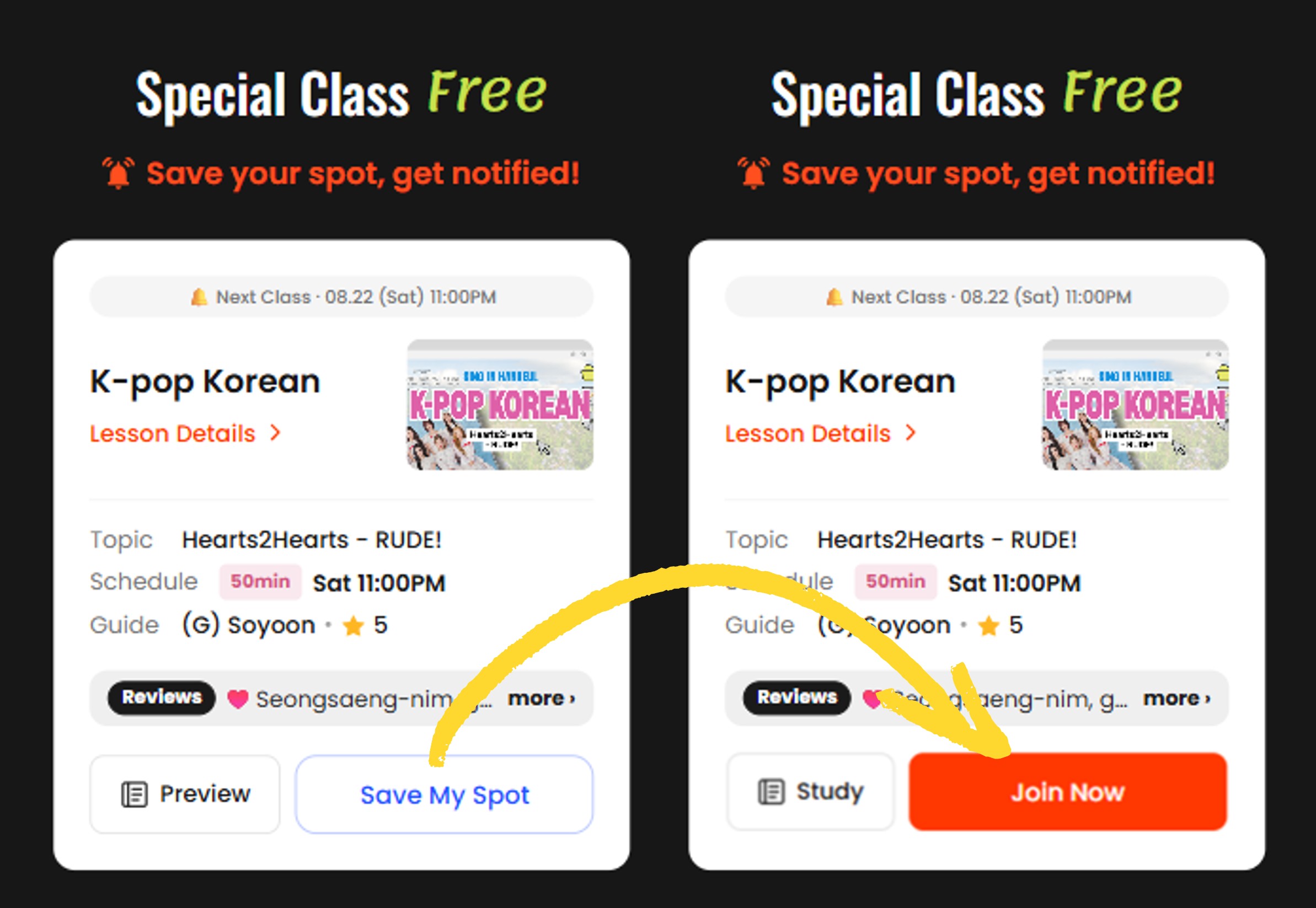
- Find the "Special Class Free" section and click "Save My Spot."
💡 Good to Know
- How to enter: You don't need a separate Zoom link! When it's time for class, the "Save My Spot" button will automatically change to "Join Now." Simply click it to enter the classroom.
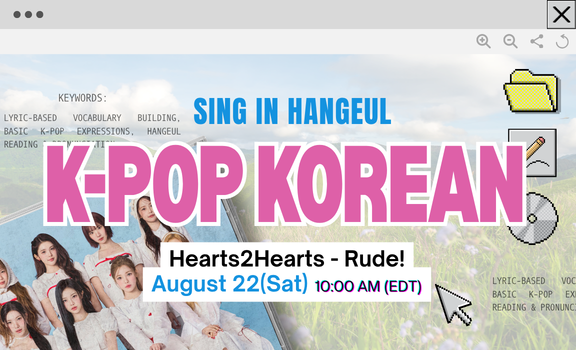
- Class time: The session is scheduled for Saturday, August 22nd at 10:00 AM EDT. However, you don't need to worry about time conversions—the schedule on our website automatically displays the start time in your local time zone.
❓ Free K-pop Korean Class — FAQ
- Is the class really free? Yes. Live group classes are completely free — no payment, no card required. You just sign up and show up.
- Do I need to know any Korean already? No. Classes are beginner-friendly, and the K-pop lessons are built so total beginners can follow along. If you can't read Hangeul yet, that's fine — signing up also unlocks a free 1:1 trial lesson where you can start learning to read.
- What do we do in a class to learn Korean through K-pop? You listen to the song, learn the key words and expressions in the lyrics, practice the tricky pronunciation, and sing along. It's relaxed and fun — mistakes are expected and totally welcome.