"Left on Read" in Korean: 읽씹, 안읽씹, and the KakaoTalk Rules Nobody Teaches You
Being ignored over text hurts in every language — but Korea gave it a name. Two of them, actually. Here's what 읽씹 and 안읽씹 mean, why a tiny number "1" runs the whole game, and the group-chat slang you'll actually use.
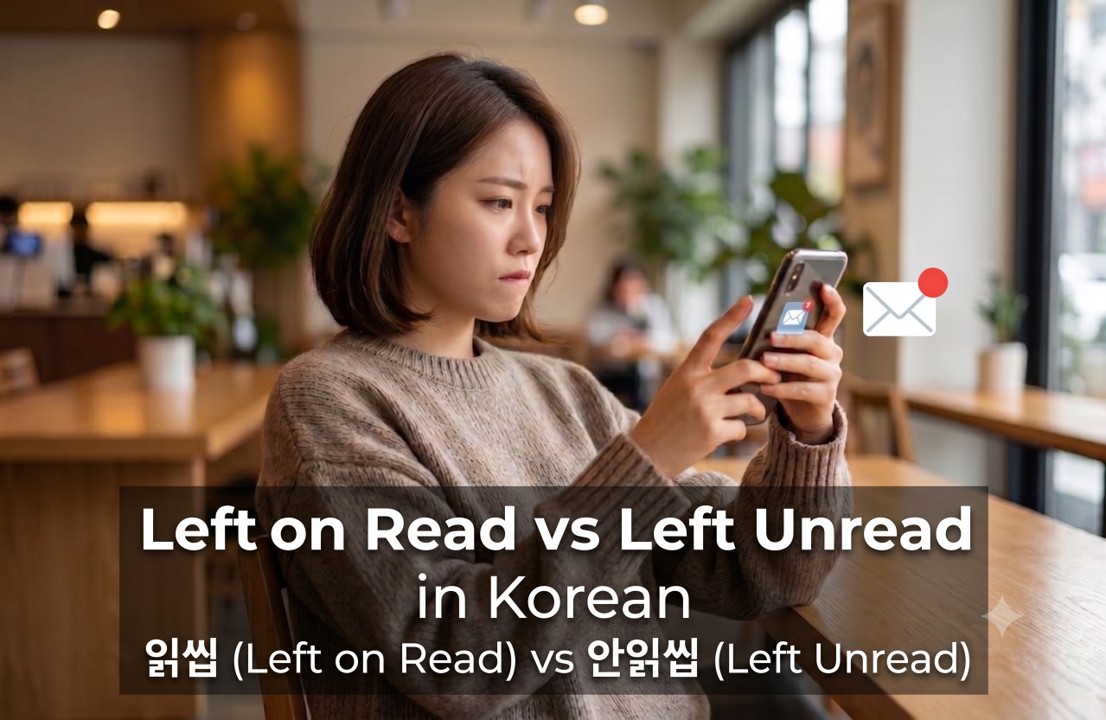
Have you ever been left on read — you can see they opened your message, and... nothing? Or worse, they didn't even open it? 😤
Korea has slang for exactly this — and it's some of the most useful, true-to-life Korean you can learn, because it's what people actually text about every single day. Once you know these words, Korean group chats suddenly make a lot more sense. Let's get into it. 💬
💬 읽씹 vs 안읽씹: The Two Ways to Get Ignored
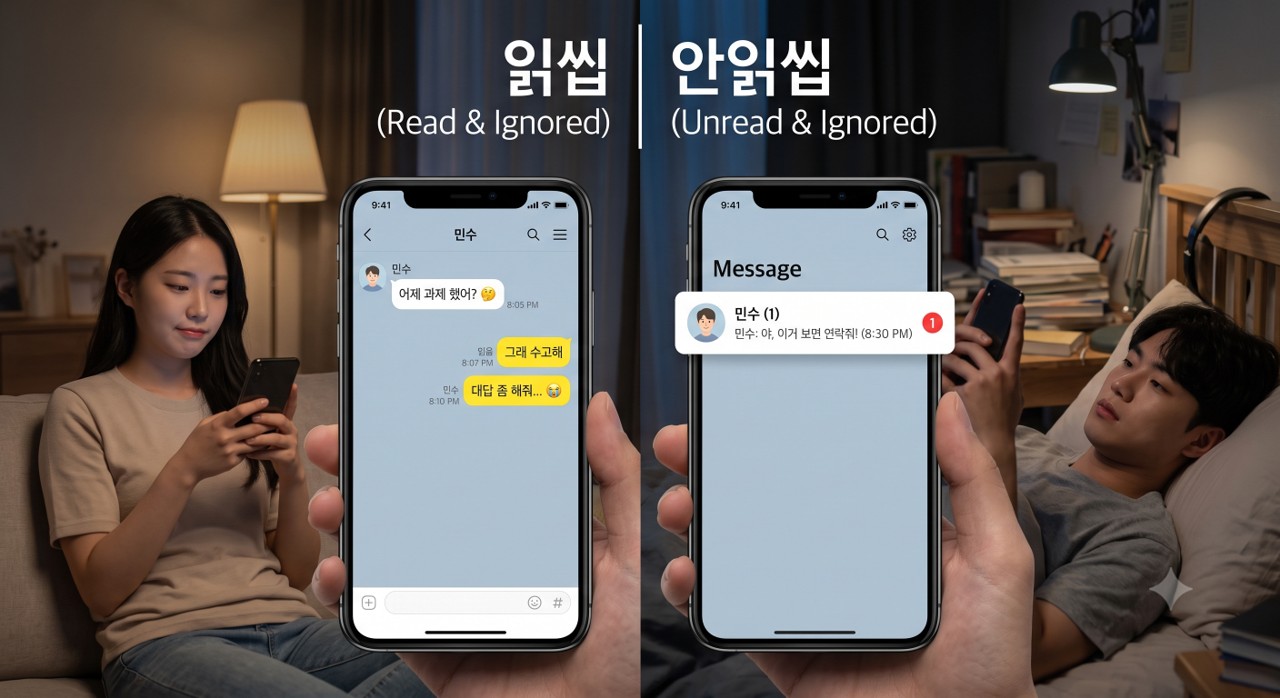
Both words are built from 씹다 (ssip-da) — literally "to chew," but in slang it means "to ignore / blow off" a message. Stick that together with whether the person read it or not, and you get:
- 읽씹 (il-ssip) = 읽고 씹다 → "read and ignored." They opened your message, saw it, and just... didn't reply. This is the Korean "left on read."
- 안읽씹 (an-il-ssip) = 안 읽고 씹다 → "ignored without even reading." They never opened it at all. Add 안 (an, "not") to the front, and you've flipped 읽씹 into "left unread."
Simple formula: 안 (not) + 읽 (read) + 씹 (ignore). Learn one, and you've basically learned both.
🔢 The Secret Ingredient: That Little "1" on KakaoTalk
Here's the cultural key that confuses every newcomer. On KakaoTalk (카카오톡) — Korea's do-everything messaging app — an unread message shows a small yellow "1" next to it. The moment the other person opens the chat, that 1 disappears.
That tiny number is the whole drama:
- If the 1 is gone but there's no reply → you've been 읽씹 (read and ignored). They definitely saw it.
- If the 1 is still there for days → that's 안읽씹 (left unread). They're avoiding even opening it.
And here's the twist Koreans love to debate: 안읽씹 can actually feel worse. Sure, if someone's just busy, leaving the "1" up is harmless. But if you can tell they're deliberately not opening it — while their Instagram stories keep updating, or they're replying in other chats — that "1" sitting there for days can sting more than a plain 읽씹. It reads as active avoidance. 😬
💡 Pro-tip Koreans actually use: since a KakaoTalk notification preview shows the message text without opening the chat, some people read the whole thing from the lock screen and still leave the "1" up. Sneaky — but it's a real 안읽씹 move.
👥 Where It All Happens: 단톡방 (Group Chats)
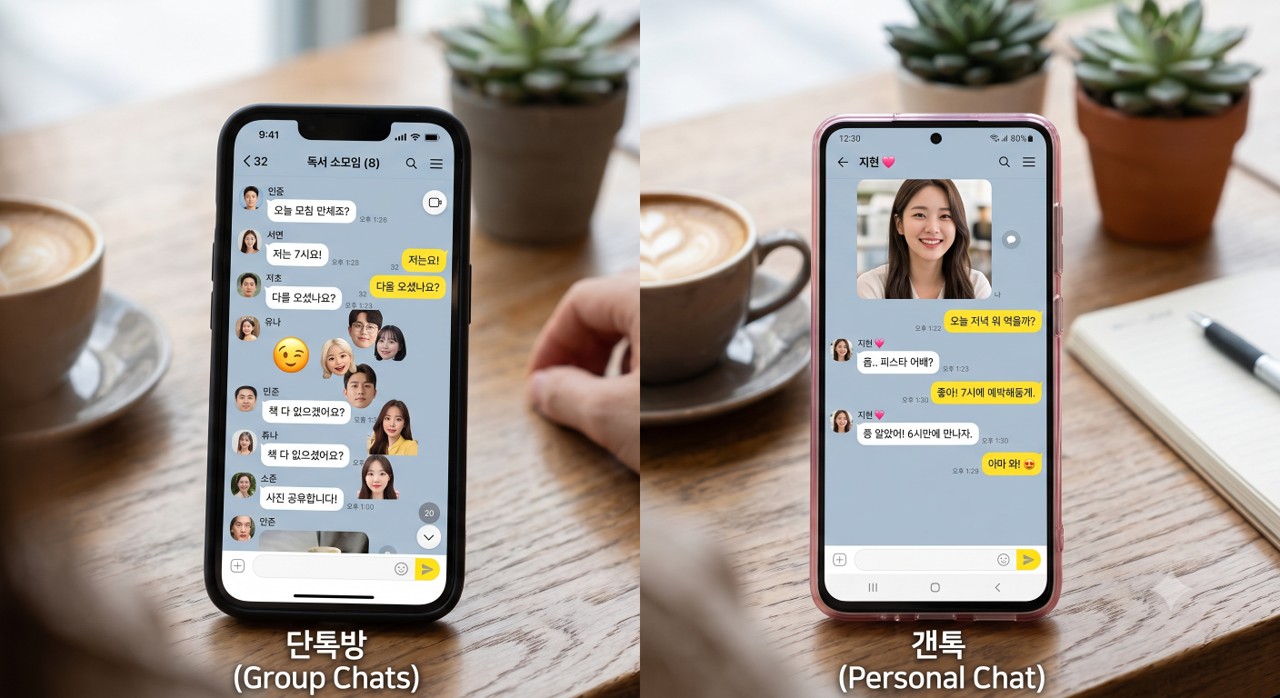
The number-one battlefield for read-and-ignored drama? Group chats.
단톡방 (dan-tok-bang) is short for 단체 카톡방 (dan-che ka-tok-bang) — a "group KakaoTalk room." Break it down:
- 단체 (dan-che) — group
- 카톡 (ka-tok) — KakaoTalk (itself short for 카카오톡)
- 방 (bang) — room (the same 방 you see in 노래방 karaoke room and PC방 gaming café)
In a 단톡방, being ignored is extra visible — everyone can see the message was read by several people and still got no reply. The opposite of a 단톡방 is a 갠톡 (gaen-tok) — a one-on-one "personal chat" (from 개인 카톡). Getting 읽씹'd in a 갠톡 is personal; getting 읽씹'd in a 단톡방 is public. 😅
Put it together in one real sentence:
단톡방에서 읽씹이랑 안읽씹 중에 뭐가 더 기분 나빠? (dan-tok-bang-e-seo il-ssip-i-rang an-il-ssip jung-e mwo-ga deo gi-bun na-ppa?) — "In a group chat, which feels worse: being left on read, or left unread?"
That's a genuinely fun question to ask a Korean friend — and it turns out even K-pop idols have strong opinions.
🎤 The Great Debate: 안읽씹 vs 읽씹 — Which Is Worse?
Here's a question Koreans genuinely argue about: which stings more — being left on read (they saw it and didn't reply), or left unread (they won't even open it)? There's no right answer. Some say a 읽씹 at least means they saw you; others say a multi-day 안읽씹 feels colder, like active avoidance. It's the kind of thing friends debate for fun.
Even idols have opinions on it — ATEEZ (에이티즈) got into this exact "would you rather" in a video. See how they use 읽씹 and 안읽씹 in a real, natural conversation in the clip on our Instagram. 👀
🗣️ More Texting Slang You'll Need
Once you're in the 읽씹 world, these come up all the time:
- 읽씹당하다 (il-ssip-dang-ha-da) — "to get left on read" (the receiving end). 나 또 읽씹당했어 = "I got left on read again." 😭
- 선톡 (seon-tok) — "first text," from 먼저(first) + 카톡. The one who messages first. Big in dating talk: 좋으면 먼저 선톡하겠지 = "If they liked you, they'd text first."
- 손절 (son-jeol) — originally a stock-market term (cut your losses), now slang for cutting someone out of your life. Chronic 읽씹 offenders often get 손절'd: 읽씹 자꾸 하면 손절각이야 = "Keep leaving me on read and I'm cutting you off."
- 칼답 (kal-dap) — "knife-reply," i.e. an instant response — the total opposite of 읽씹.
Notice these aren't textbook words — they're the real Korean of everyday phone life, the stuff you'll actually use the moment you're in a Korean group chat.
📝 Korean Vocabulary From This Post
| Korean | Romanization | Meaning |
|---|---|---|
| 읽씹 | il-ssip | Left on read (read + ignored) |
| 안읽씹 | an-il-ssip | Left unread (ignored without opening) |
| 단톡방 | dan-tok-bang | Group KakaoTalk chat |
| 선톡 | seon-tok | Texting first |
| 손절 | son-jeol | Cutting someone out of your life |
Sample sentence: 단톡방에서 계속 읽씹당하면 손절각이지.
(dan-tok-bang-e-seo gye-sok il-ssip-dang-ha-myeon son-jeol-gak-i-ji.)
"If I keep getting left on read in the group chat, it's grounds for cutting them off."
🎓 Learn the Korean People Actually Text — Free Trial Lesson
Slang like 읽씹, 단톡방, and 손절 is the real, living Korean that decides how you connect with people here — and it's the stuff textbooks skip entirely.
At Seoul X On, our lessons are built around the Korean you'll actually use: the words in your group chats, your DMs, your day-to-day life — not the phrases you memorize and forget. And they're 1:1 live lessons with a real teacher. Sign up for a free account and your first 1:1 lesson is on us.
Try your free 1:1 trial lesson →
❓ Korean Texting Slang — Quick FAQ
What does 읽씹 mean? 읽씹 (il-ssip) means "left on read" — someone opened your message, read it, and didn't reply. It's a blend of 읽다 (to read) and 씹다 (slang for "to ignore").
What's the difference between 읽씹 and 안읽씹? 읽씹 = they read it and ignored you. 안읽씹 = they never opened it at all (the message stays "unread"). Adding 안 ("not") flips 읽씹 into 안읽씹.
What does the "1" mean on KakaoTalk? The yellow "1" next to a message means it's unread. When the other person opens the chat, the 1 disappears — so a vanished "1" with no reply means you've been 읽씹'd.
What does 단톡방 mean? 단톡방 (dan-tok-bang) is a group KakaoTalk chat — short for 단체 카톡방 (group KakaoTalk room). A one-on-one chat is a 갠톡 (gaen-tok).